

I’d be happy to polish this article draft for publication. However, I notice the article is cut off mid-sentence in the final FAQ section. I’ll complete that section professionally and remove all placeholder/recommendation text that was meant as internal notes (like the “Image and Media Recommendations” and “Schema Markup Recommendation” sections), transforming them into actionable guidance or removing them as appropriate for a reader-facing blog post.
- Introduction: Why “Create” Matters Now
- What “Create” Means: Definitions and Dimensions
- Core Principles of Effective Creation
- Step-by-Step Process to Create Anything
- 1. Discover and Define
- 2. Ideate and Prioritize
- 3. Prototype and Build
- 4. Test and Validate
- 5. Launch and Scale
- 6. Iterate and Maintain
- Frameworks That Help You Create Better
- Design Thinking
- Lean Startup
- Jobs-to-be-Done (JTBD)
- OKRs (Objectives and Key Results)
- Service Blueprinting
- Tools and Technologies to Support Creation
- Ideation & Research
- Design & Prototyping
- Build & Launch
- Measure & Optimize
- Collaboration & Project Management
- Practical Techniques to Boost Creativity
- Case Studies: Real-World Examples of Creation
- Case Study 1: Startup MVP to Product-Market Fit
- Case Study 2: Solo Creator Launching a Digital Course
- Case Study 3: Corporate Team Innovating Internally
- Common Pitfalls and How to Avoid Them
- Actionable Checklists: Ready-to-Use Templates
- SEO, Distribution, and Getting Your Creation Seen
- Measuring Success: Key Metrics and KPIs
- Collaboration Models for Team Creation
- Accessibility, Ethics, and Inclusive Creation
- Frequently Asked Questions (FAQ)
Here is the fully polished, publication-ready version:
—
Create: A Practical Guide to Creative Process, Tools, and Strategies for Building Anything
Quick summary: This comprehensive guide explains what it means to create, explores creativity frameworks, details step-by-step processes for turning ideas into tangible results, recommends tools and workflows, provides case studies and examples, and includes actionable checklists to help individuals and teams build products, art, services, or systems efficiently and sustainably.
Introduction: Why “Create” Matters Now
Creation sits at the heart of progress. Whether you’re launching a startup, writing a novel, designing a product, or crafting a social campaign, the ability to create reliably and repeatedly is a practical skill—not just an innate talent. In an era of rapid change, creators who combine disciplined process with flexible thinking produce better outcomes faster. This article will teach you how to create: how to generate high-quality ideas, evaluate them, prototype and test, scale what works, and avoid common pitfalls. You’ll learn proven frameworks, tool recommendations, and real-world examples that apply to individuals, small teams, and organizations.
What “Create” Means: Definitions and Dimensions
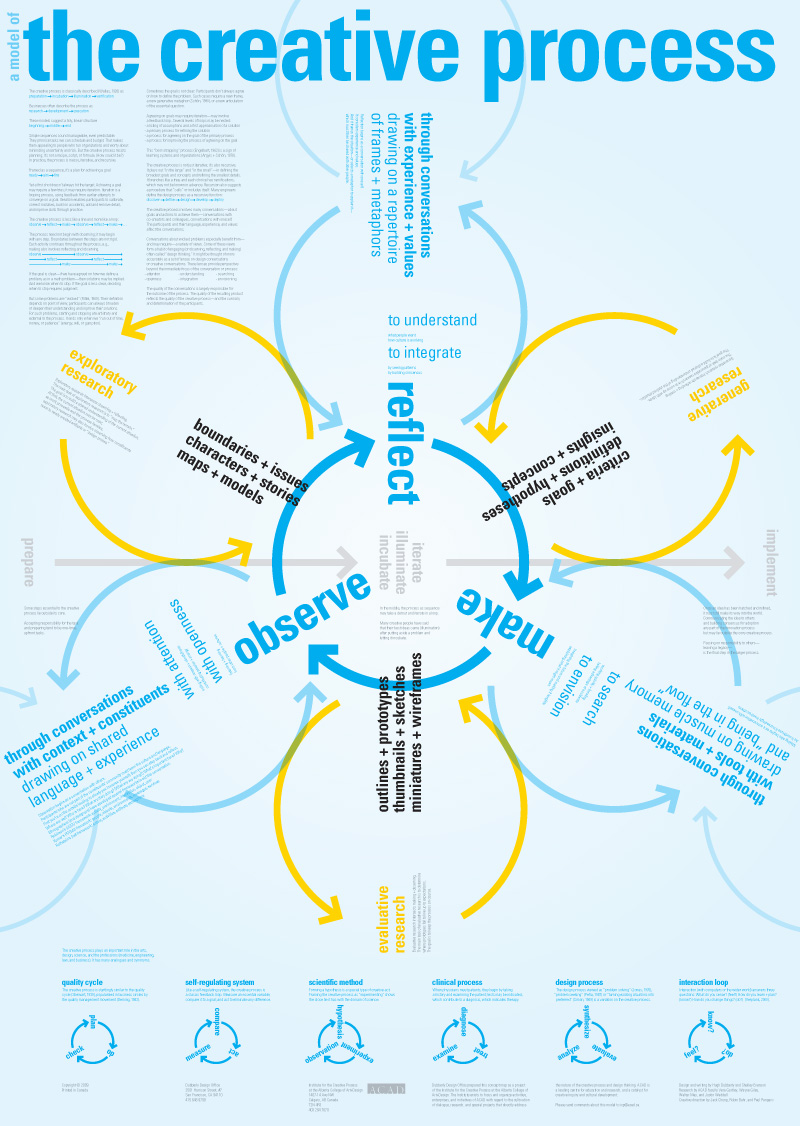
Creation is the purposeful act of producing something new or transforming existing elements into a novel form that has value to a person or community. Creation spans multiple dimensions:
- Ideation: Generating concepts and opportunities.
- Design: Structuring functionality, aesthetics, and user experience.
- Production: Building, coding, writing, or manufacturing the output.
- Validation: Testing assumptions with users, customers, or stakeholders.
- Distribution: Delivering the creation to its intended audience.
- Iteration: Refining through feedback and measurement.
- Clarity of purpose: Define the problem or value proposition before designing solutions.
- Build small, test fast: Use minimum viable experiments rather than full-featured launches.
- User-centered thinking: Prioritize real user needs over internal assumptions.
- Constraints drive creativity: Use time, budget, or technical boundaries to focus solutions.
- Iterative learning: Treat each version as a learning opportunity with measurable outcomes.
- Cross-pollination: Combine ideas from different domains for fresh perspectives.
- Research: market, users, competitors, and trends.
- Interview stakeholders and potential users (5–10 interviews for early-stage validation).
- Define success metrics (e.g., activation rate, conversion, engagement time).
- Write a concise problem statement: “Who has what problem, and why it matters.”
- Use divergent techniques: brainwriting, SCAMPER, mind mapping.
- Score ideas based on impact, feasibility, and alignment with goals.
- Create an opportunity canvas or one-page brief for top ideas.
- Choose a prototype fidelity: sketch, clickable mockup, or functional MVP.
- Leverage rapid tools: Figma for UI, Notion or Webflow for landing pages, Arduino or Raspberry Pi for hardware tests.
- Set up analytics and tracking for experiments before launch.
- Use A/B tests, interviews, usability testing, and cohort analysis.
- Measure against your predefined success metrics.
- Document learnings in a shared repository for organizational memory.
- Build scalable architecture and processes: automation, CI/CD, and standardized content templates.
- Invest in distribution: SEO, partnerships, paid advertising, community building.
- Formalize support and measurement for sustainable growth.
- Adopt a continuous improvement cadence (weekly sprints, quarterly roadmaps).
- Monitor metrics and user feedback to prioritize next features.
- Retire or refactor components that no longer provide value.
- Miro or FigJam — collaborative whiteboards for workshops.
- Google Trends, AnswerThePublic — topical research and keyword insights.
- Adobe Creative Cloud — visual assets and advanced design work.
- Framer or ProtoPie — higher-fidelity interaction prototypes.
- GitHub + CI/CD — version control and automated deployments.
- Firebase, Supabase — backend services for MVPs.
- Hotjar, FullStory — session recordings and heatmaps.
- Amplitude — product analytics and behavioral cohorts.
- Trello or Asana — lightweight project management for cross-functional teams.
- Slack or Microsoft Teams — real-time communication with integrations.
- Timeboxing: Limit ideation or writing sessions to avoid overthinking.
- Cross-disciplinary prompts: Combine unrelated constraints (e.g., “design a fitness app for night-shift nurses”) to get novel ideas.
- Constraint mapping: Convert constraints into creative opportunities by listing what’s fixed and what’s flexible.
- Analogous inspiration: Study solutions in other fields and adapt core mechanics.
- Daily creative habit: Commit to a small, repeatable creative task—writing 300 words, sketching a concept, or building a micro-prototype.
- Pitfall: Overbuilding before validation. Fix: Define the riskiest assumption and test it with the smallest experiment.
- Pitfall: Ignoring qualitative feedback. Fix: Combine analytics with user interviews to understand why metrics move.
- Pitfall: Scope creep and feature bloat. Fix: Use clear acceptance criteria and measure feature ROI before adding complexity.
- Pitfall: Siloed knowledge. Fix: Maintain public project docs and rotate cross-functional reviews.
- Pitfall: Burnout from constant output pressure. Fix: Build sustainable rhythms and prioritize high-impact tasks.
- List three measurable success metrics.
- Conduct 5–10 user interviews and summarize key quotes.
- Create a one-page opportunity canvas.
- Build a landing page with email capture and clear value proposition.
- Set up analytics and event tracking.
- Perform usability testing with at least 5 participants.
- Run the experiment for a pre-determined period (e.g., 2–6 weeks).
- Run prioritized experiments from the backlog.
- Communicate results to stakeholders and update the roadmap.
- Plan resources for scaling or sunsetting features based on evidence.
- SEO: Optimize landing pages and content for long-tail keywords relevant to your audience; use schema markup for articles and product pages.
- Content marketing: Publish helpful tutorials, case studies, and how-to guides that demonstrate your creation’s value.
- Paid acquisition: Run targeted ads on platforms where your audience spends time (Google Ads, Facebook/Instagram, LinkedIn).
- Partnerships: Collaborate with influencers, complementary products, or communities for co-promotion.
- Community and organic growth: Build email lists, Discord/Slack communities, or active social profiles to foster advocacy.
- Discovery stage: Click-through rate (CTR) on landing, email sign-ups, interview conversion.
- MVP stage: Activation rate, time-to-value, retention after 7 and 30 days.
- Growth stage: Monthly active users (MAU), churn, lifetime value (LTV), customer acquisition cost (CAC).
- Revenue stage: Conversion rate to paid plans, average revenue per user (ARPU), gross margin.
- Follow WCAG guidelines for digital accessibility; include alt text for images and semantic HTML.
- Design for privacy by default: collect minimal data and be transparent about usage.
- Assess ethical implications and bias in models, content, or distribution.
- Engage diverse voices early to avoid exclusionary designs.

Core Principles of Effective Creation
Successful creators consistently apply a set of core principles. Follow these to increase the odds of meaningful results:
Step-by-Step Process to Create Anything
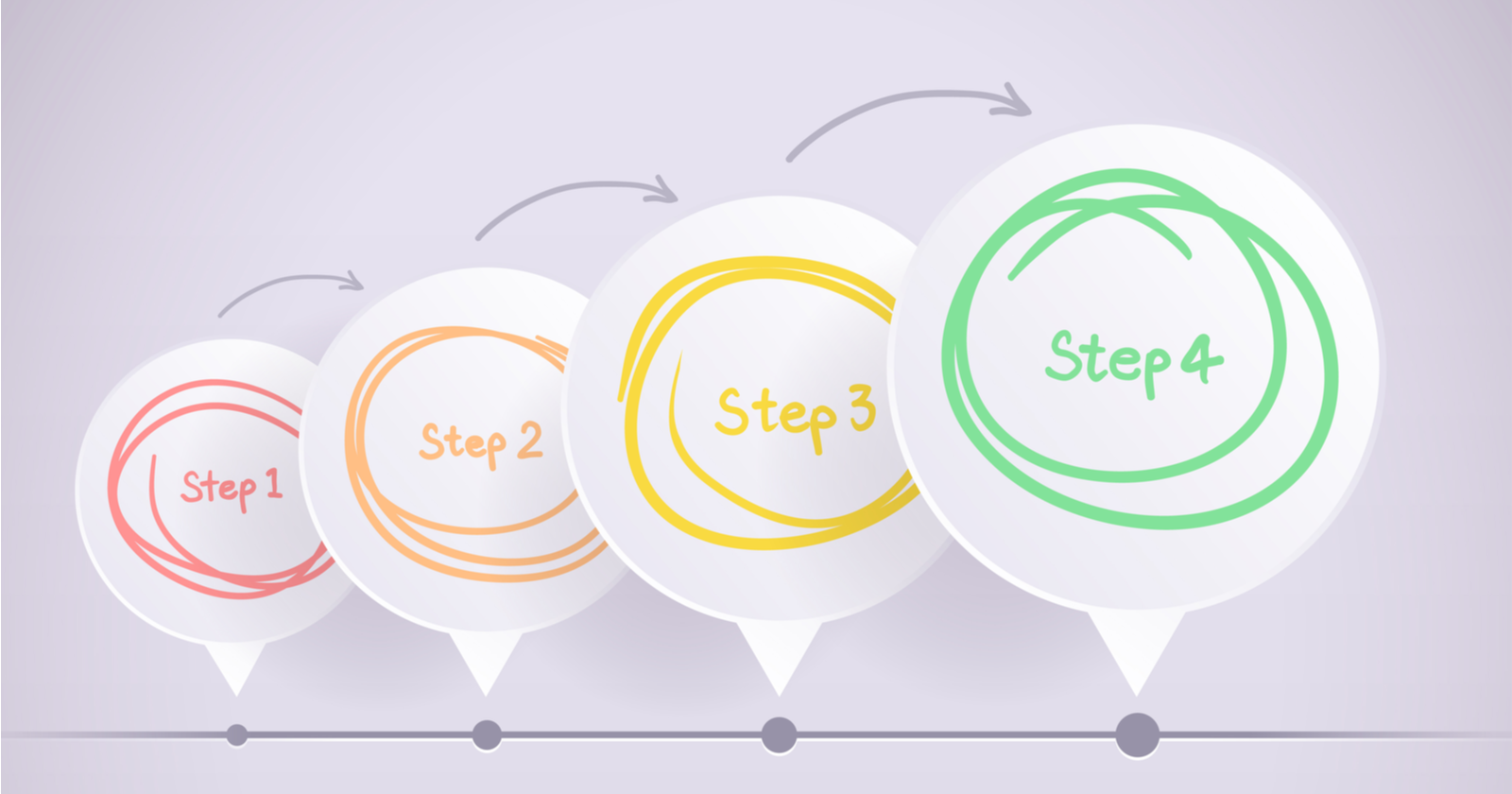
This section provides a reproducible process you can apply to projects of any scale.

1. Discover and Define
Start by collecting information and forming a clear problem statement.

2. Ideate and Prioritize
Generate options and choose the most promising with simple criteria.
3. Prototype and Build
Translate the idea into a tangible, low-cost experiment.
4. Test and Validate
Run experiments to gather data, then decide to iterate, pivot, or persevere.
5. Launch and Scale
When validated, prepare to scale the product or output through deliberate systems.
6. Iterate and Maintain
Even successful creations require ongoing refinement.
Frameworks That Help You Create Better
Applying structured frameworks reduces uncertainty and speeds decision-making. Here are actionable frameworks used across industries.
Design Thinking
Empathize, define, ideate, prototype, and test—best for solving human-centered problems.
Lean Startup
Build-Measure-Learn loop focused on validated learning via rapid experiments and MVPs.
Jobs-to-be-Done (JTBD)
Focus on the job a user hires a product to do; useful for product-market fit and positioning.
OKRs (Objectives and Key Results)
Set ambitious objectives and measurable key results to align teams during scaling.
Service Blueprinting
Map employee actions, customer interactions, and backstage processes for service design.
Tools and Technologies to Support Creation
Selecting the right tools speeds the path from idea to outcome. Here are recommended tools organized by stage.
Ideation & Research
– Notion — research databases, interview notes, and opportunity canvases.
Design & Prototyping
– Figma — UI/UX design and interactive prototypes.
Build & Launch
– Webflow — no-code websites and landing pages for fast validation.
Measure & Optimize
– Google Analytics 4, Mixpanel — user analytics and event tracking.
Collaboration & Project Management
– Jira or Linear — engineering workflows and issue tracking.
Practical Techniques to Boost Creativity
Boosting creative output is both a skill and a habit. These techniques have proven effective for individuals and teams.
Case Studies: Real-World Examples of Creation
Case Study 1: Startup MVP to Product-Market Fit
A fintech startup identified that small restaurants had difficulty managing tips across multiple payment terminals. Using customer interviews, they created a one-page landing page (built in Webflow) describing the solution and tracked sign-ups. After validating demand, they built an MVP with Stripe integration and a simple mobile dashboard within 8 weeks. Early adopters provided feedback that led to two core pivots: simplifying onboarding and adding multi-location support. Six months after launch, the product reached 5% weekly growth in active restaurants.
Case Study 2: Solo Creator Launching a Digital Course
An educator tested course topics by publishing short YouTube videos and measuring engagement. They then validated willingness-to-pay with a presale using Gumroad and limited coaching spots. The creator used Notion as the course hub and Teachable for enrollment. Iteration on lesson structure and supplemental templates increased completion rates from 22% to 48% across cohorts.
Case Study 3: Corporate Team Innovating Internally
A product team at a large enterprise ran a 5-day design sprint to address declining onboarding retention. The sprint produced a new guided-setup flow and in-app tips. They A/B tested the flow on 10% of new sign-ups and saw a 17% lift in 14-day retention. The team then rolled out the change and adopted sprint cadence for other priority initiatives.
Common Pitfalls and How to Avoid Them
Even experienced creators fall into predictable traps. Watch for these and adopt the fixes:
Actionable Checklists: Ready-to-Use Templates
Pre-Project Checklist
1. Write a one-sentence problem statement.
MVP Launch Checklist
1. Define the minimum feature set that tests the core hypothesis.
Post-Launch Iteration Checklist
1. Review metrics weekly and summarize learnings.
SEO, Distribution, and Getting Your Creation Seen
Creating value is only half the battle; people must discover it. Use these distribution tactics based on intent and budget:
Measuring Success: Key Metrics and KPIs
Choose metrics aligned with your stage and goals. Examples:
Collaboration Models for Team Creation
Teams create best when roles, processes, and rhythms are explicit. Consider these models:
Cross-functional Sprint Team
Small, multidisciplinary teams work in short sprints (1–2 weeks) to ship experiments quickly.
Pod Structure
Pods (product + engineering + design + growth) own a vertical outcome and operate semi-autonomously.
Guild and Chapter Model
Maintain functional expertise across teams while aligning work through objectives and quarterly planning.
Accessibility, Ethics, and Inclusive Creation
Creating responsibly means considering accessibility, privacy, and societal impact.
Frequently Asked Questions (FAQ)
Q: How long does it take to create a viable prototype?
A: For most digital products, a low-fidelity prototype can be produced in 1–2 days; a functional MVP usually takes 4–12 weeks depending on scope and team size.
Q: What if I don’t have a technical background?
A: No-code and low-code tools (Webflow, Bubble, Notion, Zapier) have dramatically lowered the barrier to entry. Many successful products, courses, and services have been launched by non-technical creators using these platforms.
Q: How do I know if my idea is worth pursuing?
A: Validate the riskiest assumption first. Conduct user interviews, create a landing page to gauge interest, or run a small presale. If people are willing to give time, money, or attention, you have a signal worth acting on.
Q: What’s the best way to stay motivated during long projects?
A: Break the work into small, visible milestones. Celebrate progress, not just completion. Maintain a feedback loop with users or peers to keep the work grounded and energizing.
Q: How do I balance creativity with deadlines?
A: Use timeboxing and constraints deliberately. Set a clear scope for each session, and protect time for deep work. Deadlines can actually enhance creativity by forcing decisions and prioritization.
—
Ready to start creating? Pick one small project this week, apply the pre-project checklist, and build your first prototype. The best way to learn is to begin.