

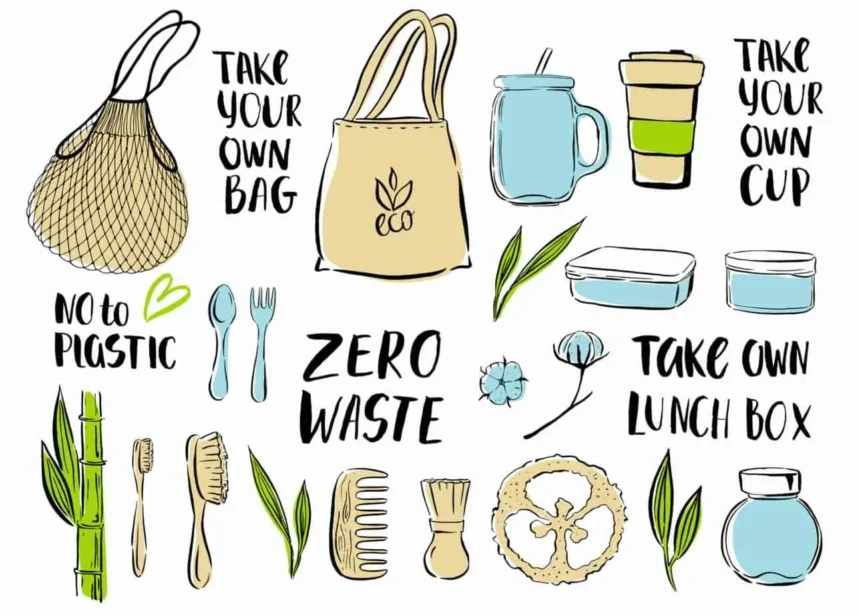
Making changes can really make a difference. Here are ten simple things you can do to use plastic, save some money, and make your home more sustainable. These are zero-waste swaps that can add up to make a big impact on the environment and your wallet. Zero-waste swaps are a way to reduce plastic and make your home more sustainable.
- 1. Replace single-use bags with reusable produce and grocery bags
- 2. Switch disposable water bottles to a stainless steel bottle
- 3. Use bar soap & shampoo bars
- 4. Reusable coffee cup and to-go cutlery
- 5. Compost food scraps
- 6. Bulk buying & refill stations
- 7. Cloth napkins & towels
- 8. Refillable cleaning bottles
- 9. Buy second-hand and quality over fast consumption
- 10. Swap plastic wrap for beeswax wraps or silicone lids
1. Replace single-use bags with reusable produce and grocery bags
Keep a few lightweight reusable bags in your car or by the door. Choose breathable cotton mesh for product.
2. Switch disposable water bottles to a stainless steel bottle
I really like my bottles because they last for a very long time. Stainless bottles keep my drinks cold for hours. The best thing about bottles is that they help reduce plastic waste. I think stainless steel bottles are a choice because they reduce plastic waste quickly, and that is very good for our planet.
3. Use bar soap & shampoo bars
Bars are really good at cutting down on packaging waste. They also use fewer chemicals. You should store your bars on a drying soap dish so that they last longer. This way, you can make your bars last for a time. Bars are a way to reduce waste.
4. Reusable coffee cup and to-go cutlery
When you are getting coffee, it is an idea to carry a collapsible cup with you. You should also carry bamboo cutlery for takeout. Lots of cafes will give you discounts if you use these things instead of theirs. This is because they like it when people reuse things like your cup and bamboo cutlery for coffee and takeout.
5. Compost food scraps
Compost is really good for the earth because it helps cut down on the things that landfills put into the air. At the time, compost makes the soil full of good nutrients that gardens and potted plants love to grow in. This is because compost is made from food and plants that break down into a rich soil that helps gardens and potted plants grow really well. Compost is very useful for gardens and potted plants.
6. Bulk buying & refill stations
Buy grains, spices, and cleaners in bulk. Bring your own jars to refill shops.
7. Cloth napkins & towels
Replace paper towels and napkins with washable cloth alternatives.
8. Refillable cleaning bottles
Use concentrated refills or make simple cleaners from vinegar and baking soda.
9. Buy second-hand and quality over fast consumption
When you are buying things, try to get the ones that will last for a time. If something breaks, do not throw it away. Instead, try to fix it. This way, you can use the things you have for a period. Choose items that’re strong and can withstand a lot of use. This is better than buying things all the time. For example, things like furniture and appliances should be fixed when they are broken rather than getting new ones. This helps to make the items last longer, like the items you bought.
10. Swap plastic wrap for beeswax wraps or silicone lids
These alternatives are things that you can wash. They help to keep your food fresh for a longer time. The alternatives are really good at keeping food fresher for a period.
To get started is the first step. Getting started can be very exciting. When you are getting started, you do not know what to expect from getting started. Getting started is a beginning, for getting started.
Pick 2–3 swaps, track costs saved, and scale gradually. Celebrate small wins to build lasting habits.